
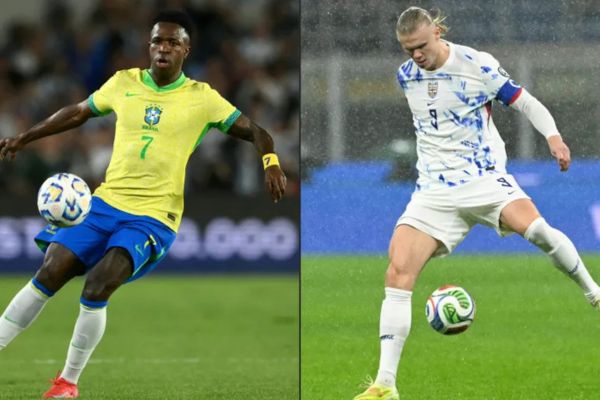
The Brazil vs Japan clash delivered one of the most dramatic finishes of the FIFA World Cup 2026 round of 32. Brazil entered the match as favourites, but Japan refused to treat the game like a formality. They pressed with discipline, defended with intelligence, and nearly dragged the five-time world champions into extra time before Gabriel Martinelli struck deep into stoppage time.
Brazil eventually won 2-1, but the scoreline only tells part of the story. Japan led first, frustrated Brazil for long periods, and showed once again why they are no longer viewed as outsiders on the world stage. For Brazil, the victory brought relief. For Japan, the defeat came with disappointment but also respect. For official match statistics, team line-ups, and the complete match report, visit FIFA’s official Brazil vs Japan match page.
Brazil vs Japan Result: A Late Winner Saves Brazil
The Brazil vs Japan result finished 2-1 in Brazil’s favour after a tense knockout battle in Houston. Japan took the lead in the 29th minute through Kaishu Sano, punishing Brazil after a defensive lapse. Brazil struggled to find rhythm in the first half and went into the break under serious pressure.
Casemiro brought Brazil level in the second half with a powerful header, giving Carlo Ancelotti’s side the control they had been missing. Still, Japan stayed compact and looked ready to force extra time until Martinelli produced the decisive moment in stoppage time.
For the official match details, FIFA’s match centre recorded Brazil’s 2-1 win over Japan in the Round of 32 on June 29, 2026.
Japan Shocked Brazil First
The first major moment came when Kaishu Sano scored for Japan in the 29th minute. It was a deserved goal because Japan had shown tactical discipline and attacking intent from the start.
That goal changed the rhythm of Brazil vs Japan. Brazil were forced to chase the match, while Japan grew in confidence. For neutral fans, it created the possibility of a famous World Cup upset.
Japan’s organisation was one of the strongest parts of their performance. They did not simply sit deep and hope to survive. They closed central spaces, limited Brazil’s passing lanes, and used quick transitions whenever Brazil lost possession.
Brazil’s Experience Changes the Game
Brazil’s response came through Casemiro in the second half. His 56th-minute equaliser was important not only because it levelled the score but also because it calmed Brazil at a dangerous moment.
From there, Brazil increased the pressure. The passing became quicker, the movement became sharper, and Japan had to defend deeper than they had in the first half.
That is often where Brazil’s tournament experience matters. Even when they are not at their fluent best, they still have players who can solve tight matches. Against Japan, that experience became the difference.
Gabriel Martinelli Delivers the Decisive Moment
The defining moment of Brazil vs Japan arrived in stoppage time. Gabriel Martinelli, introduced as a second-half substitute, scored the late winner that sent Brazil into the next round.
It was the kind of goal that changes the emotional meaning of a match. For Brazil, it turned frustration into relief. For Japan, it turned a brave performance into heartbreak.
Martinelli’s impact also showed the value of Brazil’s squad depth. In knockout football, substitutes often decide matches, especially when opponents begin to tire. Brazil needed fresh energy, direct movement, and composure in the final third. Martinelli gave them exactly that.
What Brazil Got Right
Brazil did not play a perfect match, but they showed three important qualities.
First, they stayed patient after falling behind. Many teams panic when an underdog scores first in a knockout match, but Brazil kept searching for openings.
Second, Ancelotti’s substitutions helped change the tempo. Brazil looked more direct late in the game, and that eventually forced Japan into deeper defensive positions.
Third, Brazil found a way to win when the performance was not fully convincing. That matters in World Cup football. The best teams do not always dominate every round, but they survive difficult nights.
What Japan Proved Despite Defeat
Japan may have lost, but their performance deserves serious respect. They showed maturity, tactical discipline, and belief against one of the most decorated teams in football history.
This was not a lucky performance built only on defending. Japan had a clear plan. They pressed at the right moments, protected dangerous central areas, and attacked with purpose when opportunities appeared.
Their World Cup campaign ended with disappointment, but the bigger picture is encouraging. Japan continue to prove that they can compete with elite football nations, not just trouble them occasionally.
A Wider World Cup Pattern
This match also fits into one of the biggest stories of FIFA World Cup 2026: traditional football powers are being pushed harder than ever.
Argentina had to survive a thriller against Cape Verde, another match that showed how dangerous underdog nations have become. You can read our full analysis here: Argentina vs Cape Verde: Messi Leads Argentina Through World Cup Thriller as Cape Verde Win Global Respect.
Morocco have also continued their impressive rise, storming into the quarter-finals after a commanding win over Canada. Read more here: Canada 0-3 Morocco: Morocco Storm Into World Cup Quarter-Finals.
The message is clear. This World Cup is not only about famous teams and famous players. It is also about nations proving they belong on the biggest stage.
What This Means for Brazil
Brazil’s win over Japan sent them into the Round of 16, but it also raised questions. Their attacking quality remains obvious, yet the first-half struggle showed that they can be vulnerable when opponents press with confidence and defend compactly.
Against stronger knockout opponents, Brazil need a sharper start. They cannot rely on late winners every time.
Still, survival matters. Brazil advanced, their key players responded under pressure, and Martinelli gave the team another attacking storyline to build around.
Japan Leaves With Pride
Japan’s exit will hurt because they were so close to forcing extra time. Yet their performance against Brazil should be remembered as another sign of progress.
They played with courage, structure, and belief. They made Brazil uncomfortable. They gave their supporters a match to be proud of.
In the end, Brazil vs Japan became more than a simple knockout result. It became a reminder that World Cup football is changing. Big names still matter, but organisation, confidence, and tactical intelligence can make any match dangerous.
Brazil survived. Japan earned respect. And the FIFA World Cup 2026 gained another unforgettable knockout story.
Frequently Asked Questions
What Was The Brazil vs Japan Result?
Brazil defeated Japan 2-1 in the FIFA World Cup 2026 Round of 32 after Gabriel Martinelli scored a dramatic stoppage-time winner.
When Was Brazil vs Japan Played?
Brazil vs Japan was played on June 29, 2026, in the FIFA World Cup 2026 Round of 32.
Who Scored in Brazil vs Japan?
Kaishu Sano scored for Japan, while Casemiro and Gabriel Martinelli scored for Brazil in the 2-1 knockout victory.
Why Was Brazil vs Japan Important?
The match was important because Japan nearly produced a major World Cup upset, while Brazil had to rely on experience and a late winner to advance.
Who Did Brazil Face After Beating Japan?
Brazil advanced to the Round of 16 after beating Japan, where they faced Norway in their next knockout match.