
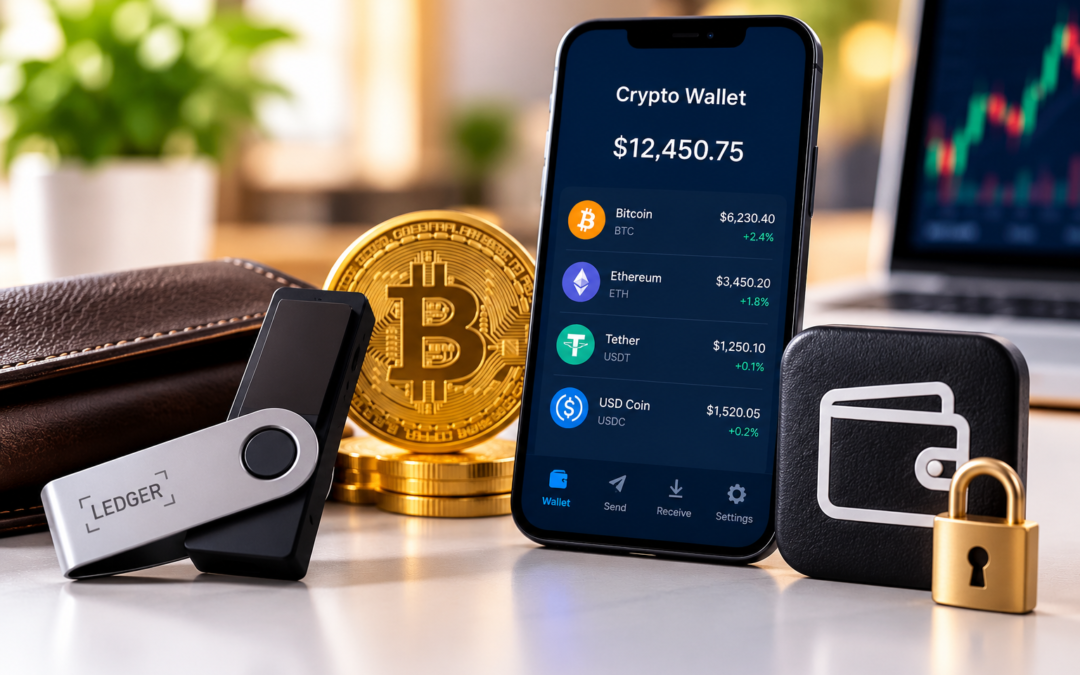
Buying cryptocurrency is one thing. Keeping it safe is another. You might own Bitcoin, Ethereum, or other digital currencies, but where should you keep them? And how do you know whether your money is actually secure?
With so many wallets available, choosing one can feel confusing, especially if you’re new to crypto. Some work like everyday mobile apps, while others look like small USB devices. The best crypto wallets offer different levels of security, convenience, and control. Let’s explore how they work and which options might suit your needs.
What Is a Crypto Wallet?
A crypto wallet is a tool that helps you access, manage, and transfer cryptocurrency. Unlike a regular wallet that holds physical money, a crypto wallet doesn’t actually store your coins. Your cryptocurrency remains recorded on the blockchain, while the wallet manages the digital keys needed to access it.
Think of it like having a key to a locked safe. The money is associated with your blockchain address, but your private key allows you to authorize transactions. Anyone who gets access to that key may be able to move your funds. That’s why choosing a secure wallet matters so much.
There are different types of crypto wallets, and they don’t all work the same way. Some are connected to the internet, while others keep your private keys offline. Understanding this difference is the first step toward protecting your digital assets.
Hot Wallet vs Cold Wallet
When comparing crypto wallets, you’ll often hear two terms: hot wallets and cold wallets. The difference is fairly simple, but it can make a big difference to your security.
Hot Wallets: Easy Everyday Access
A hot wallet is connected to the internet. It usually comes as a mobile app, browser extension, or computer program. These wallets are convenient because you can check your balance, send cryptocurrency, and interact with blockchain applications whenever you need to.
Popular examples include MetaMask and Phantom. They’re useful for people who regularly move cryptocurrency or use decentralized applications. Many are free to install, although blockchain transactions can still involve network fees.
The downside is that internet-connected wallets face more online threats. Fake websites, harmful software, and phishing scams can put your funds at risk. A hot wallet can still be secure when used carefully, but it requires attention to everyday online safety.
Cold Wallets: Keeping Keys Offline
A cold wallet keeps private keys offline, reducing their exposure to internet-based attacks. Hardware wallets are a common way to achieve this. These are physical devices designed to protect the keys used to approve cryptocurrency transactions.
For someone holding crypto over the long term, cold storage can be a sensible option. You don’t need to keep your main wallet connected to the internet just to hold your assets. This makes it harder for certain types of online attacks to reach your private keys.
However, cold wallets aren’t completely risk-free. Devices can be lost, damaged, or stolen, and users can still approve fraudulent transactions. You also need to protect your recovery information carefully. The US Securities and Exchange Commission’s guide to crypto custody explains these differences and the risks involved.
Best Crypto Wallets Worth Considering
There isn’t one wallet that’s perfect for everyone. Some people want something simple for everyday use, while others prefer stronger protection for long-term holdings. Here are four well-known options worth comparing, based on their different uses.
1. Ledger: For Offline Key Protection
Ledger offers hardware wallets designed to keep private keys protected within a physical device. Users can manage supported cryptocurrencies through compatible software while approving transactions using their hardware wallet.
This can be useful if you hold digital assets for longer periods and want additional protection from online threats. However, hardware wallets require careful setup, safe recovery backups, and attention to the transactions you approve.
Ledger is worth researching if offline key protection is your priority. Just remember that no device can protect you from every scam or mistake.
2. Trezor: For Self-Custody
Trezor is another established name in hardware wallets. Its devices are designed to help users manage their cryptocurrency without handing control of their private keys to an exchange.
Trezor may appeal to people who want direct control over their assets and prefer a dedicated device for transaction approval. Its products also emphasize transparency and security-focused design.
As with other hardware wallets, safe setup and recovery phrase storage are essential. Buying a device alone doesn’t guarantee that your cryptocurrency will remain secure.
3. MetaMask: For Web3 and Ethereum
MetaMask is a popular software wallet used to access Ethereum and compatible blockchain networks. It allows users to manage supported tokens, connect with decentralized applications, and approve transactions.
It’s especially useful for people who want to explore blockchain-based services rather than simply hold cryptocurrency. However, connecting a wallet to unfamiliar websites can expose users to scams or harmful transaction requests.
MetaMask explains in its official wallet security guide why protecting recovery information is so important. Anyone who gains control of your recovery phrase may be able to access your funds.
4. Phantom: For a Simple Mobile Experience
Phantom is a software wallet known for its user-friendly design and support for multiple blockchain networks. It allows users to manage supported cryptocurrencies and interact with blockchain applications through a mobile app or browser extension.
Its straightforward interface can appeal to people who prefer managing digital assets on their phones. However, like other hot wallets, it requires careful handling of recovery information, website connections, and transaction approvals.
Phantom may be convenient for regular activity, but convenience shouldn’t be confused with guaranteed safety.
Which Crypto Wallet Is Safest?
So, which option actually offers the strongest protection?
For many people holding cryptocurrency over the long term, a properly configured hardware wallet can reduce exposure to online attacks. That’s because the private keys remain protected within the device rather than being stored directly in an everyday internet-connected application.
However, the safest setup also depends on how you use the wallet. Someone who regularly interacts with unfamiliar websites could still approve a harmful transaction using a hardware wallet. Similarly, someone who loses their recovery phrase may permanently lose access to their funds.
For everyday transactions, a reputable software wallet may be more practical. Some users choose to keep smaller amounts in a hot wallet while storing longer-term holdings separately. This can reduce the amount exposed to everyday online activity.
The important thing is to match your wallet to your needs and understand the risks that come with it.
Custodial vs Non-Custodial Wallets
There’s another important decision to make when choosing a crypto wallet: who controls the private keys?
With a custodial service, such as a cryptocurrency exchange account, the company manages access to your assets. This can make account management easier because the platform handles much of the technical work. However, you’re also depending on that company to protect your funds and process withdrawals.
If the exchange experiences a cyberattack, financial problems, or withdrawal restrictions, accessing your cryptocurrency may become difficult. In some cases, customers may lose money if the company fails.
A non-custodial wallet works differently. You control the private keys or other recovery methods needed to access your cryptocurrency. This gives you greater independence, but it also means you’re responsible for keeping that access secure.
Neither arrangement removes every risk. The better choice depends on whether you’re comfortable managing your own wallet security or prefer using a third-party service.
How to Keep Your Crypto Wallet Safe
Even the best crypto wallets need proper security habits. A trusted wallet can still be compromised if you share sensitive information, download fake software, or approve suspicious transactions.
Protect Your Recovery Phrase
Your recovery phrase, sometimes called a seed phrase, is one of the most important parts of your wallet’s security. It usually consists of a series of words that can restore access to your cryptocurrency.
Never share this phrase with anyone, including someone claiming to represent wallet support. For wallets that use a recovery phrase, follow the provider’s instructions for creating a secure backup. Avoid storing an unencrypted copy in email, screenshots, or cloud documents where someone could access it.
Watch Out for Fake Wallet Apps
Crypto scammers often create websites and apps that look almost identical to legitimate wallet services. Someone searching for a wallet online could accidentally download harmful software or enter their recovery phrase into a fake website.
Always use the provider’s verified website and check download links carefully. Be suspicious of unexpected messages offering wallet upgrades, rewards, or urgent security assistance. Genuine support teams should never need your recovery phrase.
Use Strong Account Security
If you use a cryptocurrency exchange, choose a strong, unique password and enable two-factor authentication where available. Keep your phone, computer, and wallet applications updated to reduce exposure to known security problems.
For hardware wallets, buy through the manufacturer or an authorized seller and follow the official setup instructions. Never use a device that arrives with a recovery phrase already prepared for you.
It’s also sensible to send a small test transaction before transferring a large amount of cryptocurrency. Blockchain transactions are often irreversible, so checking the address and network beforehand can prevent expensive mistakes.
Can You Lose Crypto From a Wallet?
Unfortunately, yes. A wallet can help protect your cryptocurrency, but it cannot guarantee that you’ll never lose money.
One common problem is losing access to a private key or recovery phrase. If you use a self-custody wallet and have no working recovery method, there may be nobody who can restore your access.
Scams are another serious concern. Criminals may trick users into approving transactions, connecting to harmful websites, or sending cryptocurrency to fraudulent addresses. Once the funds have moved, recovering them can be extremely difficult.
There’s also the risk of cryptocurrency prices falling. Even if your wallet works perfectly, the value of the assets inside it can still change. Security protects access to your cryptocurrency; it doesn’t protect you from market losses.
If you’re interested in other ways to protect digital assets, our article on stablecoin safety and risks explains why cryptocurrencies designed to maintain a steady price can still lose value.
How to Choose the Right Wallet
Before choosing a wallet, think about how you plan to use your cryptocurrency. Are you buying Bitcoin to hold for several years, or do you expect to make regular transfers? Do you want access through your phone, or would you prefer a separate device for added protection?
Next, check which cryptocurrencies and blockchain networks the wallet supports. Not every wallet works with every digital asset, and sending tokens through an unsupported network can create serious problems.
You should also compare security features, recovery options, ease of use, and any costs involved. A wallet that looks impressive may not be the right choice if its setup is too complicated for you to manage confidently.
For beginners, understanding how a wallet works is more important than choosing the one with the longest list of features. Start with the basics, learn how to protect your access, and avoid moving large amounts until you’re comfortable using it.
Where Is Your Crypto Safest?
Choosing between the best crypto wallets isn’t simply about finding the most popular app or buying an expensive device. It’s about understanding how your cryptocurrency is protected and who controls access to it.
Hardware wallets can offer stronger protection against certain online threats, making them useful for long-term storage. Software wallets provide convenience for everyday transactions, while custodial services may be easier for people who don’t want to manage private keys themselves.
Every option comes with responsibilities and risks. Your wallet can only do so much if you share your recovery phrase, approve a scam transaction, or lose access to your backup.
The safest approach is to choose a wallet you understand, follow good security practices, and never assume your cryptocurrency is completely protected just because it’s stored in a wallet.