
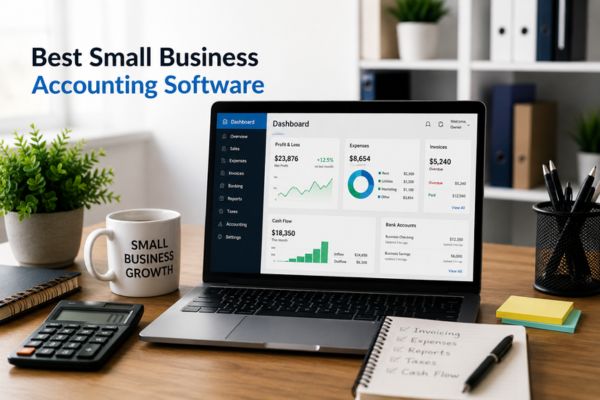
Running a successful business requires more than offering a great product or service. Managing finances efficiently is equally important, and choosing the best small business accounting software can simplify everything from invoicing and payroll to tax preparation and financial reporting. With countless options available, selecting the right platform depends on your business size, budget, and long-term goals rather than simply choosing the most popular brand.
What Makes the Best Small Business Accounting Software?
The best small business accounting software should reduce manual work while providing accurate financial insights. Core features typically include expense tracking, invoicing, bank reconciliation, financial reporting, tax management, and inventory support where applicable.
Cloud-based solutions have become increasingly popular because they allow business owners to access financial data securely from anywhere. Automatic backups, real-time reporting, and integrations with payment platforms can also improve efficiency and reduce administrative tasks.
Match the Software to Your Business Needs
Not every business requires advanced accounting features. Freelancers and startups often need simple invoicing and expense tracking, while growing companies may benefit from payroll management, multi-user access, budgeting tools, and detailed financial reporting.
Before investing in the best small business accounting software, consider your daily operations, expected growth, and whether the platform can scale alongside your business. Choosing software that supports future expansion can help avoid costly migrations later.
Don’t Focus Only on Price
Many business owners choose software based solely on subscription costs. However, the least expensive option may lack features that save valuable time and improve accuracy.
Ease of use, customer support, integration with existing business tools, and regular software updates often provide greater long-term value than the lowest monthly fee. Investing in reliable accounting software can reduce costly errors while improving financial visibility.
For practical guidance on selecting accounting systems for growing businesses, the U.S. Small Business Administration (SBA) provides valuable financial management resources for entrepreneurs.
Better Financial Decisions Start with Better Data
Modern accounting software delivers more than organised financial records. Real-time dashboards and customised reports help business owners monitor cash flow, identify spending trends, and make informed strategic decisions.
The best small business accounting software empowers business owners to understand their financial health rather than simply recording transactions. This visibility becomes increasingly valuable as businesses grow and financial complexity increases.
Technology is transforming every industry, from business finance to space exploration. For a look at how innovation supports critical decision-making beyond the business world, read our article, NASA Astronauts Return Early From ISS After Unprecedented Medical Evacuation.
Invest in the Right Foundation
Accounting software is one of the most important operational tools a business can adopt. The right solution improves efficiency, supports compliance, and provides the financial clarity needed for confident decision-making. Rather than choosing software based solely on popularity or price, evaluate your business requirements carefully to find the best small business accounting software that supports both your current needs and future growth.